


Pre-Season Injury Prevention Tips from a Physical Therapist for Fall Sports
The first week of fall sports can feel exciting, and it can also expose every gap from the summer. A few hard practices, a sudden jump in running volume, heavy equipment, repeated jumping, or fast change-of-direction drills can turn a “minor tweak” into missed time.
From a physical therapy point of view, the best injury prevention starts before tryouts, two-a-days, or the first official practice. The goal is simple: prepare the body for the actual demands of the sport instead of hoping it adapts overnight.
This guide is informational only and does not replace an evaluation from a licensed health care professional. If pain is sharp, worsening, or limiting normal movement, get assessed.
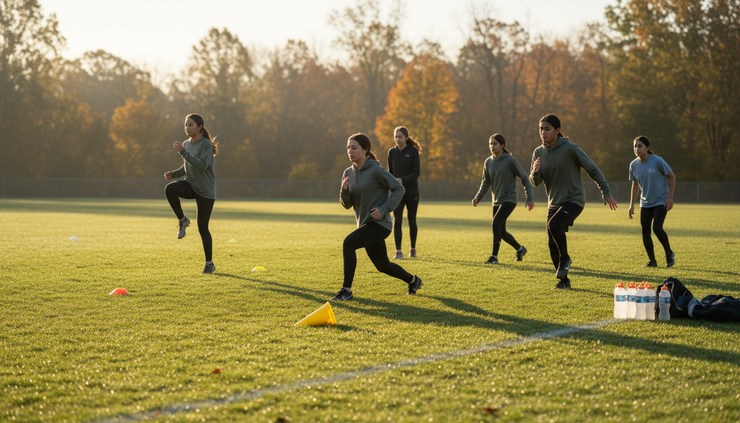
Start training before the season starts
Many pre-season injuries happen because the body is asked to do too much, too fast. Summer may include camps, workouts, or recreational play, but it often lacks the structure and intensity of fall sports.
A soccer player may go from casual juggling and light runs to repeated sprints, cutting, shooting, and full-field scrimmages. A football player may go from lifting to contact drills in pads. A cross-country runner may increase mileage while adding hills, speed work, and races.
That jump matters.
A physical therapist usually looks at three questions:
What does the sport demand?
What has the athlete done recently?
What gaps could lead to overload?
The best pre-season plan narrows that gap gradually.
A good target is to begin structured preparation several weeks before the season. That does not mean training hard every day. It means building the basics so the body can tolerate what comes next.
Focus on:
General conditioning
Sport-specific movement
Strength in key muscle groups
Mobility where needed
Recovery habits
Early attention to aches and pains
The body adapts well when stress increases in small steps. It struggles when workload spikes suddenly.
Build a base before adding intensity
Conditioning should match the sport. Running three slow miles does not fully prepare an athlete for repeated soccer sprints. Heavy lifting alone does not prepare a volleyball player for repeated jumping and landing. Long hikes do not prepare a football player for acceleration, deceleration, and contact.
Use the first phase of pre-season to build a base, then add intensity.
Match conditioning to the sport
Each fall sport stresses the body differently.
Sport | Common demands | Areas to prepare |
Football | Short bursts, contact, blocking, tackling, acceleration | Hips, neck, trunk, shoulders, hamstrings |
Soccer | Running volume, cutting, kicking, sprinting | Ankles, knees, hips, calves, groin |
Cross-country | Repeated impact, hills, pacing, endurance | Feet, calves, shins, hips, trunk |
Volleyball | Jumping, landing, quick lateral movement | Ankles, knees, hips, shoulders |
Field hockey | Low posture, sprinting, rotation, change of direction | Hips, back, knees, ankles |
Cheer | Jumping, tumbling, stunting, balance | Wrists, shoulders, core, hips, ankles |
Training does not need to copy practice exactly, but it should prepare the body for the same patterns.
For example, a basketball-style conditioning test may not fit a cross-country runner. A long steady run may not prepare a football player for repeated five-second bursts. Specificity helps.
Increase workload gradually
One of the simplest ways to reduce injury risk is to avoid abrupt increases in training volume.
For runners, that may mean slowly increasing weekly mileage instead of doubling it. For field athletes, it may mean adding sprint work in small amounts before full-speed scrimmages. For jumping sports, it may mean limiting the first few sessions of high-volume jumps.
A good weekly plan balances harder days with lighter ones. The schedule should not feel like a punishment for taking the summer off.
A sample build for the first few weeks might include:
Two to three conditioning sessions
Two strength sessions
One to two mobility or recovery sessions
One full rest day
Sport skill work at controlled intensity
The exact plan depends on age, sport, training history, and current fitness. The key is steady progress.
Use a dynamic warm-up every time
A warm-up is not just a formality. It is the bridge between rest and high-speed movement.
Static stretching before practice, like holding a hamstring stretch for a long time, may help with flexibility over time. But before training, the body usually needs movement, heat, rhythm, and activation.
A good dynamic warm-up should raise body temperature, move joints through useful ranges, and prepare the nervous system for quick reactions.

A simple pre-practice warm-up
This warm-up can fit most fall sports and takes about 10 to 15 minutes.
Light movement
Jog, skip, side shuffle, or bike easily for a few minutes. The goal is to feel warmer, not tired.
Mobility drills
Move through the ankles, hips, upper back, and shoulders.
Good options include:
- Leg swings
- Hip circles
- Walking knee hugs
- Inchworms
- Open-the-gate steps
- Arm circles
Activation work
Turn on the muscles that help control movement.
Use:
- Glute bridges
- Mini-band side steps
- Calf raises
- Dead bugs
- Scapular push-ups
Movement prep
Add sport-like patterns at moderate speed.
Try:
- High knees
- Butt kicks
- Carioca
- Short accelerations
- Deceleration steps
- Low pogo jumps
Build to practice speed
Finish with a few short bursts or skill movements. A soccer player may add controlled cutting. A volleyball player may add approach jumps. A football player may add stance starts.
A useful warm-up should make the first drill feel smoother, not harder.
Strength training protects more than muscles
Strength work is one of the most useful tools for pre-season injury prevention. Strong muscles help control joints, absorb force, and support better mechanics under fatigue.
The goal is not maximum lifting at all costs. For young athletes especially, technique comes first. A well-coached bodyweight squat beats a sloppy heavy squat every time.
Train the hips, trunk, and single-leg control
Many lower-body injuries show up at the knee or ankle, but the cause often includes poor hip control or weak trunk stability.
When an athlete lands from a jump, cuts, or plants to kick, the body needs to control force quickly. If the knee collapses inward, the trunk leans heavily, or the foot rolls without control, stress increases.
Helpful exercises include:
Split squats
Step-downs
Single-leg Romanian deadlifts
Lateral lunges
Glute bridges
Side planks
Farmer carries
Calf raises
Start with control. Add load only when the athlete can move well.
Do not skip the hamstrings and calves
Hamstrings help with sprinting, deceleration, and knee control. Calves help absorb impact and support running, jumping, and cutting.
Pre-season plans often overfocus on quads and general conditioning. That can leave the posterior chain underprepared.
Helpful options include:
Hamstring bridges
Sliding hamstring curls
Romanian deadlifts
Nordic hamstring progressions, when appropriate
Standing calf raises
Bent-knee calf raises
Pogo hops
Progress these carefully. Hamstring and calf soreness can linger if volume jumps too quickly.
Prepare shoulders for overhead sports
Volleyball, cheer, football, and field hockey can all stress the shoulder. The shoulder needs both mobility and control.
Good pre-season shoulder work includes:
Band external rotations
Wall slides
Serratus punches
Prone Y raises (Important to have professional check for correct technique)
Scapular push-ups
Light carries
Athletes should feel the shoulder blade moving well, not just the arm working harder.
Practice landing, cutting, and deceleration
Injuries often occur when an athlete slows down, changes direction, or lands. These moments require coordination, not just strength.
That is why a pre-season program should include movement quality.

Teach the body to absorb force
A good landing is usually quiet, balanced, and controlled. The hips move back. The knees track over the feet. The athlete does not cave inward or land stiff-legged.
Start with:
Drop landings from a low step
Squat jumps with soft landings
Lateral hops and holds
Single-leg balance reaches
Broad jumps with a stick landing
The “stick” matters. Land and hold the position for two to three seconds. If the athlete cannot control the stop, adding speed will not help.
Add cutting after control improves
Cutting drills should come after basic landing and deceleration skills. A fast cut without control can overload the knee, ankle, hip, or groin.
Progress in this order:
Jog and stop
Run and stop
Shuffle and stop
Plant and change direction at half speed
React to a coach, ball, or visual cue
Perform the same movement at sport speed
This progression is especially useful for soccer, football, field hockey, volleyball defense, and ultimate frisbee.
Respect pain before it becomes an injury
Athletes often think pain is only a problem when they cannot play. Physical therapists see the pattern differently. Many injuries start as small warning signs that get ignored.
Not every ache is dangerous. Muscle soreness after a new workout can be normal. But pain that changes movement, worsens during activity, or lingers day after day deserves attention.
Watch for red flags
Get evaluated if any of these show up:
Pain that sharpens with running, jumping, or cutting
Swelling around a joint
Limping that lasts beyond practice
Pain that keeps returning in the same spot
Numbness, tingling, or radiating symptoms
Loss of strength or range of motion
Pain that disrupts sleep
Headache, dizziness, confusion, or nausea after contact
For possible concussion symptoms, remove the athlete from play and seek proper medical guidance. Returning too soon can be dangerous.
Modify early instead of stopping late
Early changes can keep an athlete active while reducing stress on irritated tissue.
That may mean:
Reducing sprint volume for a few days
Swapping hills for flat running
Limiting jump reps
Changing footwear if shoes are worn out
Adding recovery time between hard sessions
Addressing mobility or strength deficits
Taping or bracing when advised by a clinician
The goal is not to make athletes fearful of training. The goal is to respond before the body forces a longer break.
Recovery is part of injury prevention
Training creates stress. Recovery creates adaptation. Skipping recovery is like charging into the season with a half-full battery.
Sleep, food, hydration, and rest days matter more during pre-season because workload often rises quickly.
Sleep supports tissue repair and reaction time
Sleep affects coordination, mood, focus, and physical recovery. A tired athlete may move with poorer mechanics, react more slowly, and take longer to recover from hard practices.
Simple habits help:
Keep a consistent bedtime when possible
Limit late caffeine
Put screens away before bed
Avoid stacking intense workouts after poor sleep
Use short naps carefully, not as a replacement for nighttime sleep
Fuel for the work being done
Athletes need enough food to match their training. Under-fueling can slow recovery and raise the risk of fatigue-related problems.
A practical plate often includes:
Carbohydrates for energy
Protein for muscle repair
Fruits and vegetables for micronutrients
Healthy fats for overall health
Fluids throughout the day
Hydration should start before practice, not after cramps begin. For long, hot, or very sweaty sessions, electrolytes may be useful.
Plan rest days without guilt
Rest days are training tools. They allow tissues to adapt and give the nervous system a break.
A rest day can include an easy walk, gentle mobility, or light stretching. It should not turn into a hidden workout.
Make equipment and environment part of the plan
Injury prevention is not only about exercises. Equipment, field conditions, weather, and practice setup all matter.
Check shoes and gear before the first practice
Worn-out shoes can change how the foot absorbs force. Cleats that do not match the surface can affect traction. Poorly fitted pads or braces can change movement.
Before the season, check:
Shoe tread and support
Cleat type for the playing surface
Shin guards, pads, braces, and helmets
Backpack load for student athletes
Water bottle access
Weather-appropriate clothing
Do not wait until the first game to find out something does not fit.
Prepare for heat and humidity
Early fall sports often begin in late summer weather. Heat adds stress and can make fatigue show up faster.
Athletes should build heat tolerance gradually, take hydration seriously, and report symptoms like dizziness, chills, confusion, or unusual weakness. Coaches and families should treat heat illness symptoms as urgent.
A physical therapist’s pre-season checklist
Use this checklist before fall sports begin.
Two to six weeks before the season
Begin sport-specific conditioning
Add strength training two days per week
Practice landing, cutting, and deceleration
Address old injuries or recurring pain
Check shoes and equipment
Build a sleep routine
One to two weeks before the season
Add more practice-speed movement
Keep strength work moderate and clean
Avoid sudden spikes in mileage or sprint volume
Continue mobility and recovery work
Do not test max effort every day
During the first weeks of practice
Warm up dynamically every session
Speak up about pain early
Keep rest days on the calendar
Fuel and hydrate consistently
Adjust workload when fatigue changes movement
The best plan is not complicated. It is consistent.
The takeaway before fall sports begin
Pre-season injury prevention works best when it starts before the schedule gets intense. Build conditioning gradually, warm up with purpose, train strength and control, practice safe landing and cutting, and treat pain as information.
Fall sports are demanding, and that is part of what makes them fun. A smart pre-season gives the body a better chance to meet those demands, stay healthy, and perform when the games begin.
Ready to put this into practice?
Join me for a FREE workshop on Sports Injury Prevention: learn practical strategies to keep training, stay strong, and avoid the setbacks that sideline athletes.
📅 August 12
5:30–6:30 PM📍
Chehalem Valley Chamber of Commerce, Newberg
Spots are limited: register here.
Karen Baltz Gibbs, DPT, CSCS, CMP, LMT, PN1-NC, Owner, Garage Training & Rehab Gym


Comments